
Last updated October 16, 2026
 Wrought iron
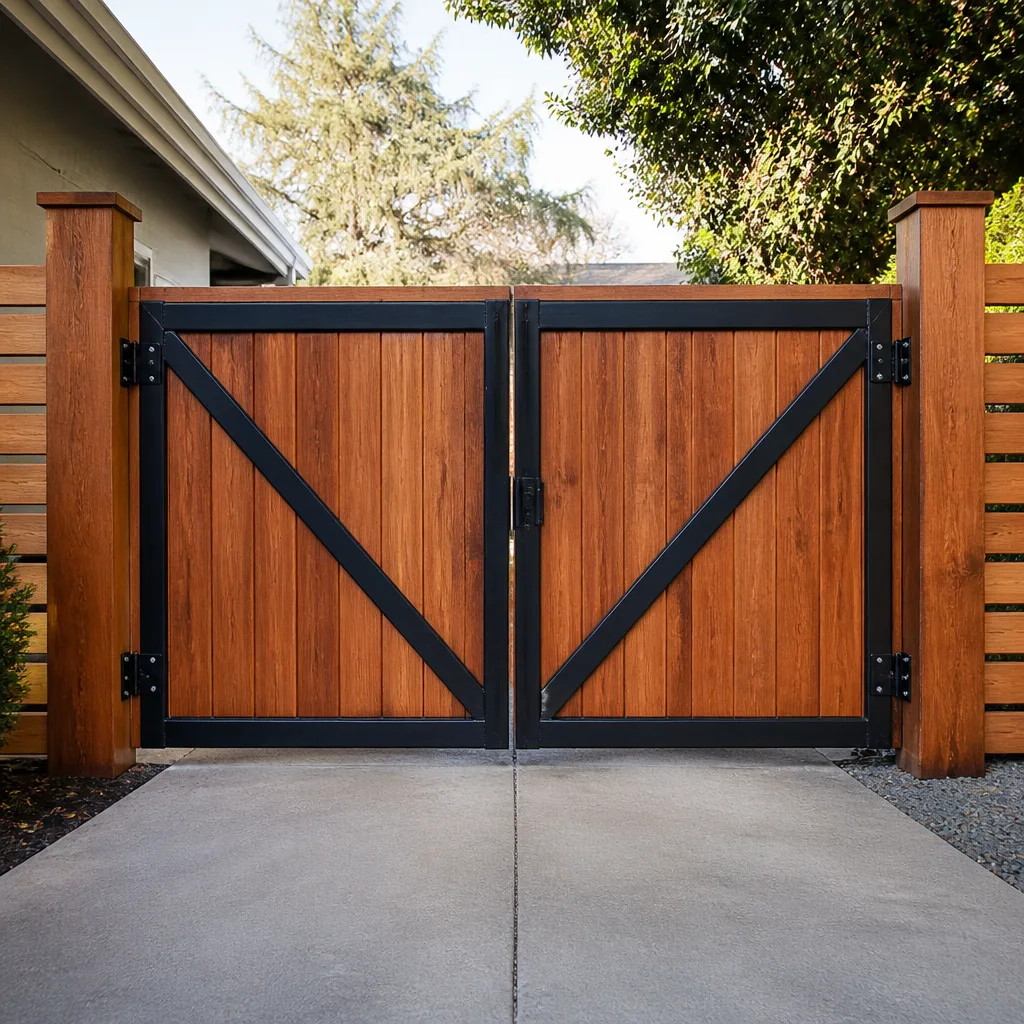 Wood & steel frame
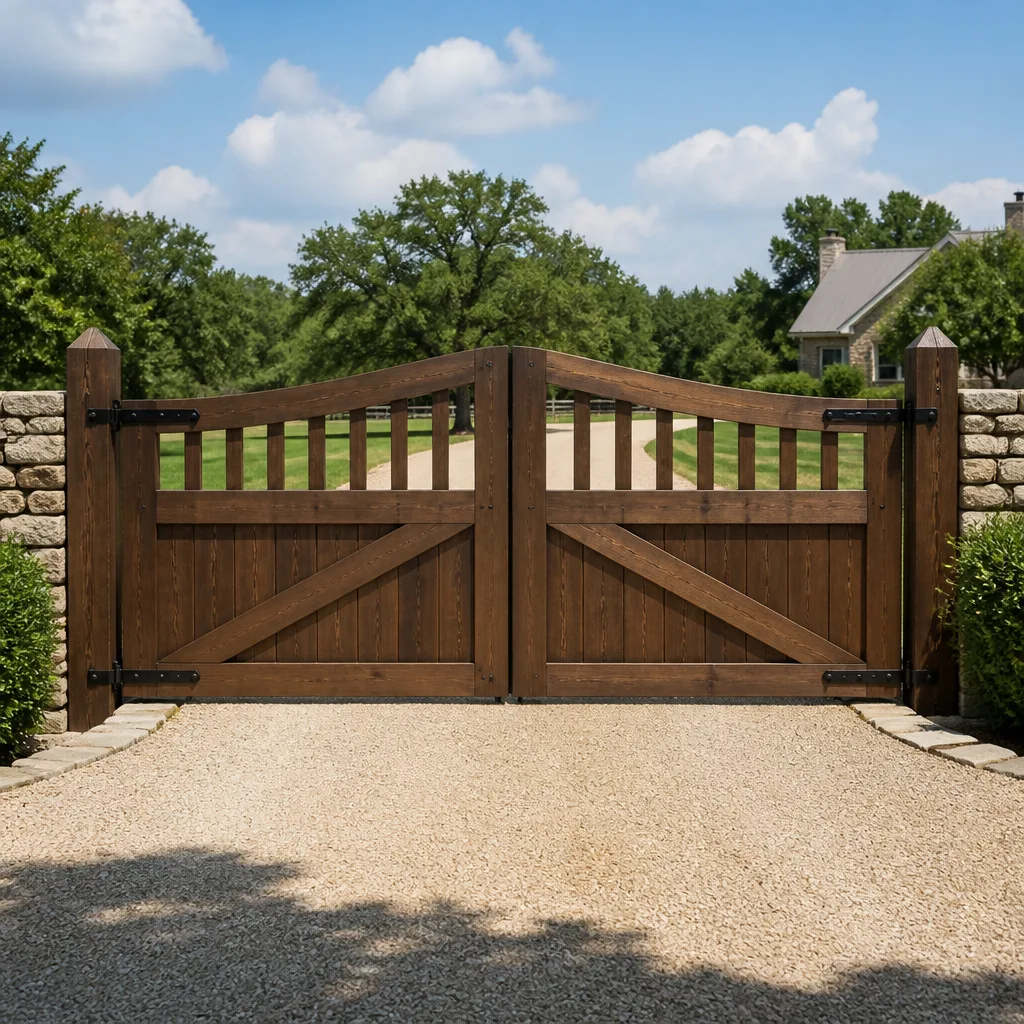 Farm & ranch
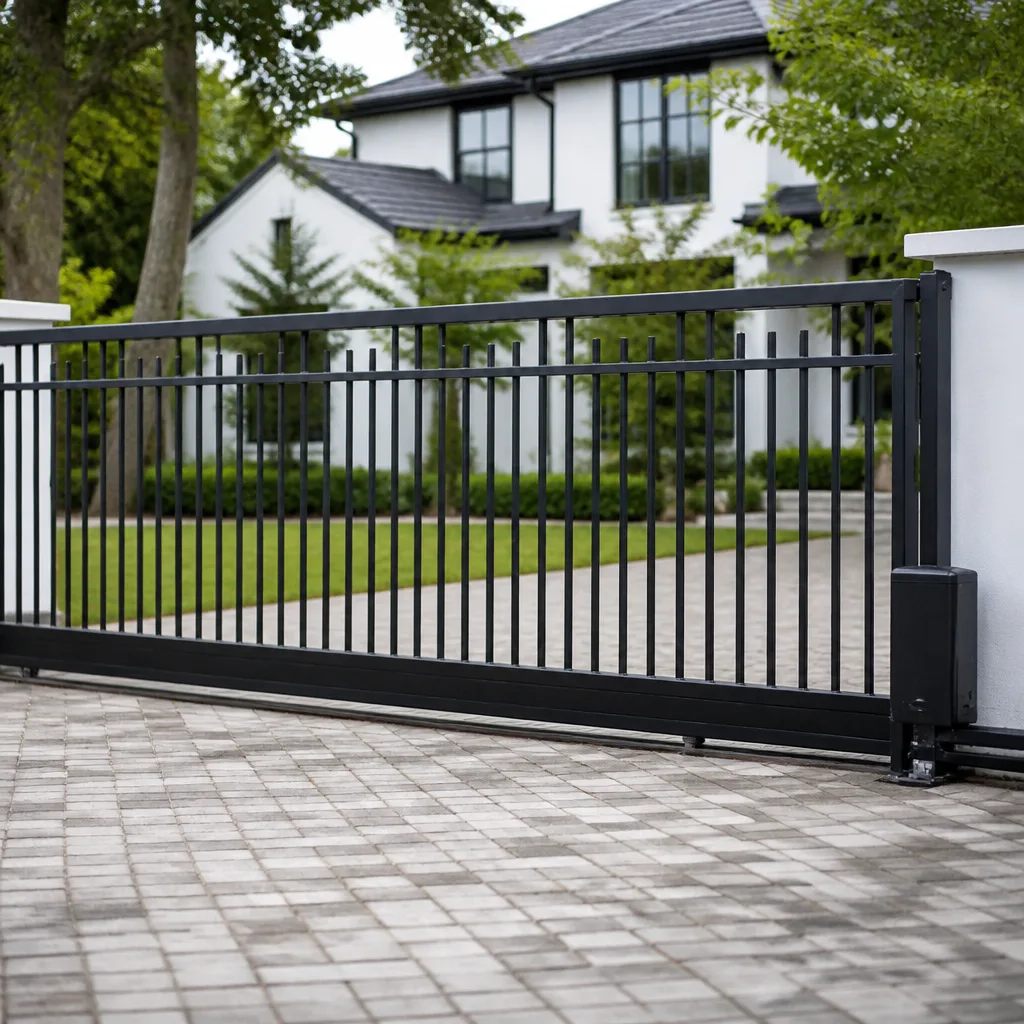 Sliding driveway gates
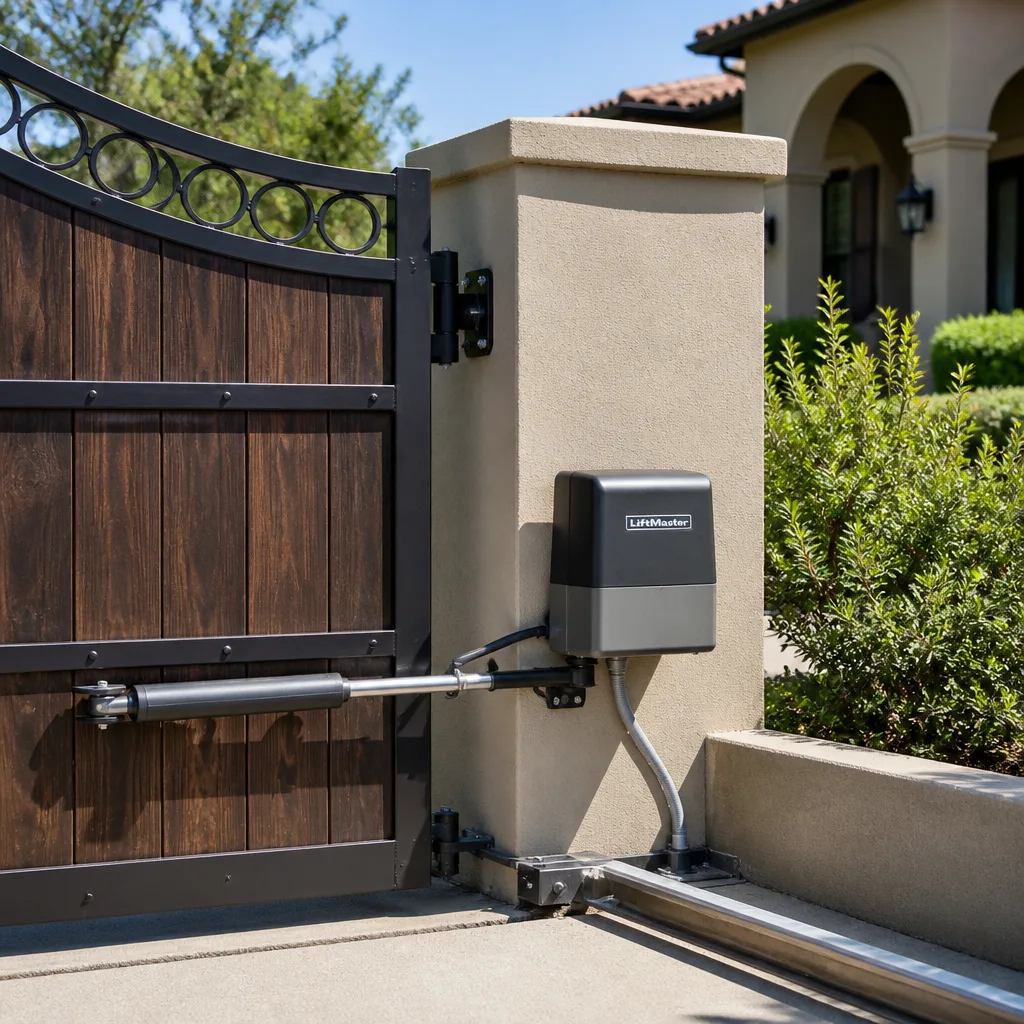 LiftMaster operators
Free on-site gate assessment - hinges, posts, and your LiftMaster or Nice gate operator checked before anything is quoted
The assessment is free and the quote is the invoice.
Get your free estimateSeasonal Gate Repair Care for Dallas: Year-Round Homeowner’s Guide
Dallas recorded nine winter ice events between 2019 and 2024 that dropped temperatures below 20°F. Each one was capable of cracking gate operator housings, seizing hinges, and draining backup batteries to zero in under 12 hours. Most homeowners find out their gate failed during the storm itself, not before. This guide schedules every preventive task around the two transition windows Dallas actually gives you: a short spring and an even shorter fall. For more detail, see The Complete Guide to Gate Repair in Dallas. You’ll learn what to inspect after a freeze, what the summer sun does to your operator’s internals, and the exact 90-minute audit to run before the first ice arrives.
Styles & brands we work with
Quick Answer
Seasonal gate care in Dallas means doing your real preventive work in March – April and October – November, because those are the only windows when temperatures are workable and failures are not actively happening. During summer, focus on shading and wiring protection against sustained 95°F+ heat. During winter ice events, the safest action is usually to leave the gate alone and switch the operator to manual mode rather than forcing a frozen mechanism.
Table of Contents
- Why Dallas Weather Is Harder on Gates Than Anywhere Else in Texas
- Spring (March – April): Post-Freeze Inspection and Repair
- Summer (June – September): Heat Damage and the One Step That Adds Seasons
- Fall (October – November): The 90-Minute Pre-Winter Audit
- Winter (December – February): What to Do When Ice Hits Mid-Cycle
- Setting Service Intervals Based on How Often Your Gate Opens
- Common Mistakes to Avoid
- When to Call a Professional
- Frequently Asked Questions
- The Bottom Line
Why Dallas Weather Is Harder on Gates Than Anywhere Else in Texas
Houston gets humidity. Austin gets heat. Dallas gets both, plus a freeze cycle that other Texas metros rarely see. A gate installed in Dallas experiences a 60-degree temperature swing inside a single week in March, followed by 40 consecutive days over 95°F in July and August, followed by an ice storm in February that drops the temperature 45 degrees in six hours. That swing is what kills components. Circuit boards expand and contract until solder joints crack. Rubber seals harden in summer, then shatter when they flex at 18°F. Powder-coated steel posts develop micro-fractures at the weld points from thermal cycling, and those fractures fill with water that freezes and widens them.
We’ve worked on gates in Dallas since 2008, and the pattern is consistent: the gate that fails during an ice storm was usually damaged during the previous summer. The heat does the slow, invisible work. The freeze just finishes the job. That’s why this guide is organized around the two transition seasons, spring and fall, when the work can actually be done safely and when the damage from the previous extreme is visible.
If you’re looking for a broader overview of what gate repair in Dallas involves, that’s the page to start with. This guide goes deeper into the seasonal rhythm.
Spring (March – April): Post-Freeze Inspection and Repair
Spring in Dallas is the first real maintenance window after winter. The ground has thawed, the freeze-thaw cycles have finished, and you can see exactly what the cold did. Here’s the order we inspect things, based on how often each component fails after a Dallas winter.
1. Post footings and the gate’s hang
Dallas soil, especially the expansive clay common in East Dallas and Garland, swells when wet and contracts when dry. A winter of alternating rain and freeze can shift a post enough to change the gate’s hang by a quarter inch. You’ll see it as a gate that drags at the latch end or leaves a wider gap at the top hinge than the bottom. A shifted post means the gate’s weight is no longer distributed the way the hinges and operator were designed for. Left alone, it accelerates hinge wear through the summer.
2. Weld joints at the hinge plates and post brackets
Run a finger (gloved, if the metal is rough) along the weld lines where hinge plates meet the gate frame. Cracks often start as hairline fractures in the paint, which expose the weld to moisture. After a freeze-thaw cycle, that moisture becomes a wedge. In North Dallas neighborhoods like Preston Hollow, where gates tend to be heavier ornamental steel, we see more weld fatigue than in lighter aluminum installations in newer Plano subdivisions.
3. Battery backup condition
If your operator has a battery backup, spring is when you test it. Cold weather permanently reduces lead-acid battery capacity, even if the battery recovers when it warms up. A battery that reads 12.8 volts at rest but drops below 10 volts under load is dead and will not operate the gate during the next power outage or freeze. Test by disconnecting AC power and cycling the gate twice. If it slows noticeably on the second cycle, the battery is on borrowed time.
4. Limit switches and travel adjustment
Freeze-thaw cycles can knock limit switches out of adjustment, causing the gate to stop short or overtravel. Overtravel is the dangerous one: it puts force on the gate frame and the operator’s gearbox every single cycle. Listen for a thunk at the end of travel and watch for the gate bouncing back slightly. That’s the operator fighting its own limit settings.
This is also the right time to address any electric gate repair issues you noticed during winter but couldn’t safely fix while ice was on the ground. The parts are easier to access, and sealants cure properly above 50°F.
Summer (June – September): Heat Damage and the One Step That Adds Seasons
Dallas summers are brutal on gate electronics in ways that don’t show up until months later. An operator housing mounted on a south-facing brick column in July can reach 140°F inside. That’s within the operating range of most circuit boards, but only barely, and sustained heat at that level does three things.
First, electrolytic capacitors on the control board dry out. These are the small cylinders that smooth voltage, and heat accelerates the evaporation of their internal electrolyte. A capacitor that fails in August might cause the gate to open but not close, or to intermittently fail to respond to remotes. Second, rubber seals and gaskets harden and lose flexibility. A seal that cracks in summer lets moisture in during October rains, and you don’t see the corrosion until December. Third, the insulation on low-voltage wiring, especially wiring run through metal conduit exposed to direct sun, becomes brittle. Flexing that wire during a repair or adjustment can crack the insulation and cause a short.
The one preventive step that consistently adds two to three seasons of operator life in Dallas: shade the operator housing and the control board from direct afternoon sun. This can be as simple as a sheet-metal shade panel mounted a few inches above the housing with an air gap, or relocating the housing to the shaded side of a post. We’ve opened operators from the same model, same year, same neighborhood, where the shaded one lasted seven years and the sun-baked one failed the board in four. For operators from brands like Ghost Controls or Mighty Mule, which use plastic housings, the difference is even more dramatic because plastic transfers heat to the board more directly than a metal enclosure.
Summer is also when we get calls for gate motor repair in Dallas from homeowners whose motors are overheating. A motor that runs hot to the touch after a single cycle, or that slows noticeably in the afternoon but runs fine at night, is telling you something. It may be a failing capacitor, or the gate itself may be binding and making the motor work harder than it should.
Fall (October – November): The 90-Minute Pre-Winter Audit
The window between Dallas’s last 90°F day and the first hard freeze is usually four to six weeks. That’s your fall maintenance window, and the work you do here determines whether your gate survives an ice storm. This audit takes about 90 minutes for most single-family gates and requires no special tools beyond a flashlight, a soft brush, and a tube of silicone dielectric grease.
- Visually inspect the operator housing seal (15 minutes). Open the housing carefully at the lowest point, not from the top, so any pooled water runs out. Check the gasket for cracks or flattening. If the gasket is compressed and no longer springs back, mark it for replacement. Water intrusion through a flat gasket is the single most common cause of winter board failures we see in Dallas.
- Test the battery backup under load (10 minutes). Disconnect AC power and run three full open-close cycles. If the gate slows by more than 25 percent on the third cycle, the battery will not survive a 12-hour outage during an ice storm. Replace it now, not in February.
- Lubricate hinges and pivot points (15 minutes). Use a lubricant that won’t attract grit, not WD-40. Apply to hinge pins, the gate’s roller track if it has one, and any bearing points. Wipe away excess. Cold weather thickens grease, and a hinge that moves freely in October will still move in February.
- Check and clean the photo eye sensors (10 minutes). Dust, spider webs, and dried grass clippings accumulate over summer. A partially blocked photo eye can cause the gate to reverse mid-cycle or refuse to close, and that problem is much more frustrating at 25°F than at 70°F. Clean the lenses with a dry cloth and check the alignment.
- Inspect the gate’s ground contact point and the frame for rust (20 minutes). Look for paint blisters and rust spots, especially at the bottom rail and any place two pieces of steel meet. Touch up with cold-galvanizing spray. In Dallas’s clay soil, the bottom rail sits in damp earth for days after rain, and October is your last chance to treat it before winter moisture freezes against raw metal.
- Run a full cycle and watch for hesitation (10 minutes). Stand where you can see the entire travel path. The gate should accelerate smoothly, maintain constant speed, and stop without a thunk. Any hesitation, grinding, or speed change means something is binding or the operator’s capacitor is weakening. Both problems become worse in cold weather.
If any of these steps reveals a problem you’re not comfortable fixing yourself, fall is the time to call. A repair done in November is a repair you won’t be making in February while ice is falling, and our Gate Repair services can handle it before the freeze hits. Warden Gate Repair Dallas sends a technician’s name, photo, and a written price before any work starts, so you know exactly who’s coming and what it will cost.
Winter (December – February): What to Do When Ice Hits Mid-Cycle
When a Dallas ice storm hits and your gate freezes mid-cycle, the instinct is to help it along. That instinct is expensive. Forcing a frozen gate with the operator, or by hand, is how gears get stripped, chains snap, and circuit boards cook themselves trying to push against ice. Here’s the safe sequence.
Step 1: Disengage the operator
Every automatic gate has a manual release, usually a small lever or pull handle on the operator housing or on the gate itself. Disengaging it separates the gate from the motor so the gate can move freely without fighting the gearbox. Do this before attempting to move the gate at all.
Step 2: Assess the freeze point
Try moving the gate by hand, slowly, through its full travel. If it moves freely, the ice is in the operator’s mechanism, not the gate’s path, and disengaging was the right call. If the gate won’t move by hand, ice has formed between the gate and the ground, or the hinges have seized. Do not force it.
Step 3: If the gate is frozen to the ground
Pour warm water, not hot, along the bottom edge of the gate where it meets the ground. Work in short pours and let the water do the work. Never use a hammer, a shovel, or the operator itself to break ice. Hammering bends the gate frame and voids most manufacturer warranties. If the freeze goes deep into the ground, wait for the thaw. A gate frozen shut for 24 hours is an inconvenience. A bent gate frame is a $2,000 repair.
Step 4: Wait for the thaw before re-engaging
Once the gate moves freely by hand, re-engage the operator and run a full cycle. Listen for strain. If the motor labors or the gate moves unevenly, disengage again and leave it manual until a professional can inspect it. The operator’s overload protection may allow it to run while damaged, which shortens the life of both the motor and the board.
During ice events, the backup battery is your gate’s only power source if the grid goes down. A battery that was marginal in fall will be dead by morning. That’s why the fall audit includes a load test. If you skipped it and find yourself with a dead operator at 6 a.m. on an icy Tuesday, use the manual release to operate the gate by hand until the thaw. It’s slow, but it works.
Setting Service Intervals Based on How Often Your Gate Opens
A gate’s maintenance schedule is not a calendar question. It’s a cycle-count question. Every open-close cycle wears hinges, cycles the operator’s capacitor, and puts load on the drive mechanism. The right service interval depends on how many cycles your gate runs per day.
Here’s how we think about it for Dallas properties:
- Single-family home, 4 – 8 cycles per day: This is the typical homeowner gate, opened when you leave for work and come home. One professional inspection per year, scheduled in fall before the freeze, covers it. Add a spring check only if you noticed winter stiffness or if the gate is over eight years old. Operators from brands like DoorKing and Elite, which are built for heavier commercial use, can run for years on this schedule without major work.
- Rental property or home office with 10 – 20 cycles per day: If you have tenants, deliveries, or a home-based business, the gate is working much harder. Two inspections per year, one in spring and one in fall, is the minimum. Pay special attention to hinge wear and limit switch adjustment. We’ve seen rental gates in East Dallas need hinge replacement within three years simply because of cycle count.
- Gated shared driveway or small multi-unit property, 20 – 40 cycles per day: This is approaching commercial duty. Quarterly visual checks are realistic, with professional service twice a year. The gate motor is the weak point here. Operators are rated for a certain number of cycles, and a shared driveway can burn through that rating in half the expected calendar life.
- Communities or mixed-use with 40+ cycles per day: This belongs on a commercial maintenance contract. Skip that, and the operator will tell you it’s unhappy at the worst possible moment, usually during an ice event or a holiday weekend.
The number that matters is not the gate’s age. It’s how many times the gate has moved. A five-year-old gate at 30 cycles a day has done more work than a fifteen-year-old gate at 5 cycles a day. Schedule service accordingly.
Common Mistakes to Avoid
- Forcing a frozen gate with the operator. This is the most expensive mistake in Dallas winter gate care. The operator will try to move the gate until its overload protection trips, and every attempt sends stress through the gearbox, chain, and gate frame. Always disengage the manual release first.
- Skipping the fall battery load test. A battery that reads good at rest can fail under load. The only way to know is to cycle the gate on battery power. If you don’t test in fall, the first real test is the ice storm itself.
- Using penetrating spray as a lubricant. Products like WD-40 are solvents that strip existing grease. They leave hinges dry within a week, which is worse in Dallas’s dust-heavy summer. Use a proper heavy-duty lubricant on hinge pins and pivot points.
- Ignoring a slow or hesitant gate in summer. Heat damage is cumulative and invisible. A gate that hesitates for half a second on a 98°F afternoon is showing you early capacitor failure. Waiting until it stops working completely turns a $150 capacitor replacement into a $600 control board swap.
- Painting over rust without treating the metal. Dallas’s clay soil holds moisture against the bottom rail. If you paint over rust, the rust continues underneath and pushes the paint off within a year. Wire-brush first, treat, then paint.
- Adjusting limit switches without knowing the travel path. A limit switch set too aggressively causes the gate to slam at the end of travel, which loosens every bolt on the frame over time. If you’re not sure how much torque is too much, leave this to a professional. It’s a five-minute adjustment that can cause a season of wear when done wrong.
When to Call a Professional
Some seasonal care tasks are genuinely DIY. Cleaning photo eyes, checking the battery, and lubricating hinges are all safe for a careful homeowner. But there are lines where the risk of doing it wrong exceeds the cost of a professional.
Call a professional if you see weld cracks at the hinge plates or post brackets, if the gate is dragging on the ground and the post appears shifted, if the operator housing has visible water intrusion or a failed gasket, if the gate motor runs hot or makes a grinding sound, or if the manual release is stuck and won’t disengage. These are all signs that the underlying structure or the operator’s internals are failing. A professional can identify the cause and fix it before the next weather event. Warden Gate Repair Dallas offers free estimates in Dallas. Call (361) 322-4460 and a live person answers, any hour, any day. You’ll get a written price before any work starts, and the 365-Day Done Right Promise means if the repair isn’t right, the return visit is free.
Frequently Asked Questions
A full seasonal inspection and tune-up in Dallas typically runs $75 to $200, depending on the gate’s size, the operator’s age, and whether any adjustments or minor parts are needed. Replacing a backup battery adds $60 to $150. Warden Gate Repair Dallas gives a written price before any work starts, so there are no surprise line items at the end. Call (361) 322-4460 for an exact quote; estimates are free.
For repair calls, yes. Warden Gate Repair Dallas maintains live phone coverage 24/7 and routes technicians to same-day calls when the problem is urgent, like a gate stuck open that can’t be secured. Seasonal maintenance and tune-ups are typically scheduled, not dispatched same-day, because the work is preventive. Call (361) 322-4460 and a live person will tell you what’s available.
A full service includes inspecting the hinges, posts, weld joints, and gate frame; testing the operator’s capacitor, limit switches, and safety sensors; load-testing the battery backup; lubricating all moving parts; checking the housing gasket for water intrusion; and adjusting the operator’s travel and force settings. You receive a written summary of what was found and the written price for anything that needs repair before it’s done. Warden is factory-trained on LiftMaster, FAAC, BFT, Linear, Viking, Ghost Controls, DoorKing, and Elite systems, so the right parts and knowledge arrive together.
Yes. In Dallas, a new gate installation includes running the low-voltage power line to the operator, installing the required safety edges or photo eyes, and setting the operator’s force limits. Warden Gate Repair Dallas specializes exclusively in gate work, which means the installation is done by people who work on gates every day. Call (361) 322-4460 for a free measure and a written price.
For a single-family gate opened 4 to 8 times a day, once a year in fall is the minimum. If your gate opens 10 or more times a day, twice a year, spring and fall, keeps the components within their expected life. Gates over eight years old may benefit from a spring check as well, even with light use, because seals and capacitors age with time, not just use.
Warden Gate Repair Dallas is authorized service for LiftMaster, FAAC, BFT, Linear, Viking, Ghost Controls, DoorKing, Elite, and Mighty Mule. If your opener is another brand, call (361) 322-4460 and a live person will confirm whether we can service it. We’ll tell you straight if we’re not the right fit.
The Bottom Line
Dallas gates fail on a predictable schedule. Summer heat weakens the components, winter ice breaks them, and the two transition seasons are your only safe windows to interrupt that cycle. Do the post-freeze inspection in March or April. Protect the operator from sun in June through September. Run the full pre-winter audit in October or November. And when ice hits, disengage the operator before you touch anything else. A gate that’s maintained on this schedule lasts years longer, and when it does need work, you’ll know the exact problem and the exact price before anyone turns a wrench. Explore more guides & resources to keep your gate running year-round.
Written by Cole Rafferty, Owner at Warden Gate Repair Dallas, serving Dallas since 2008.
See the difference
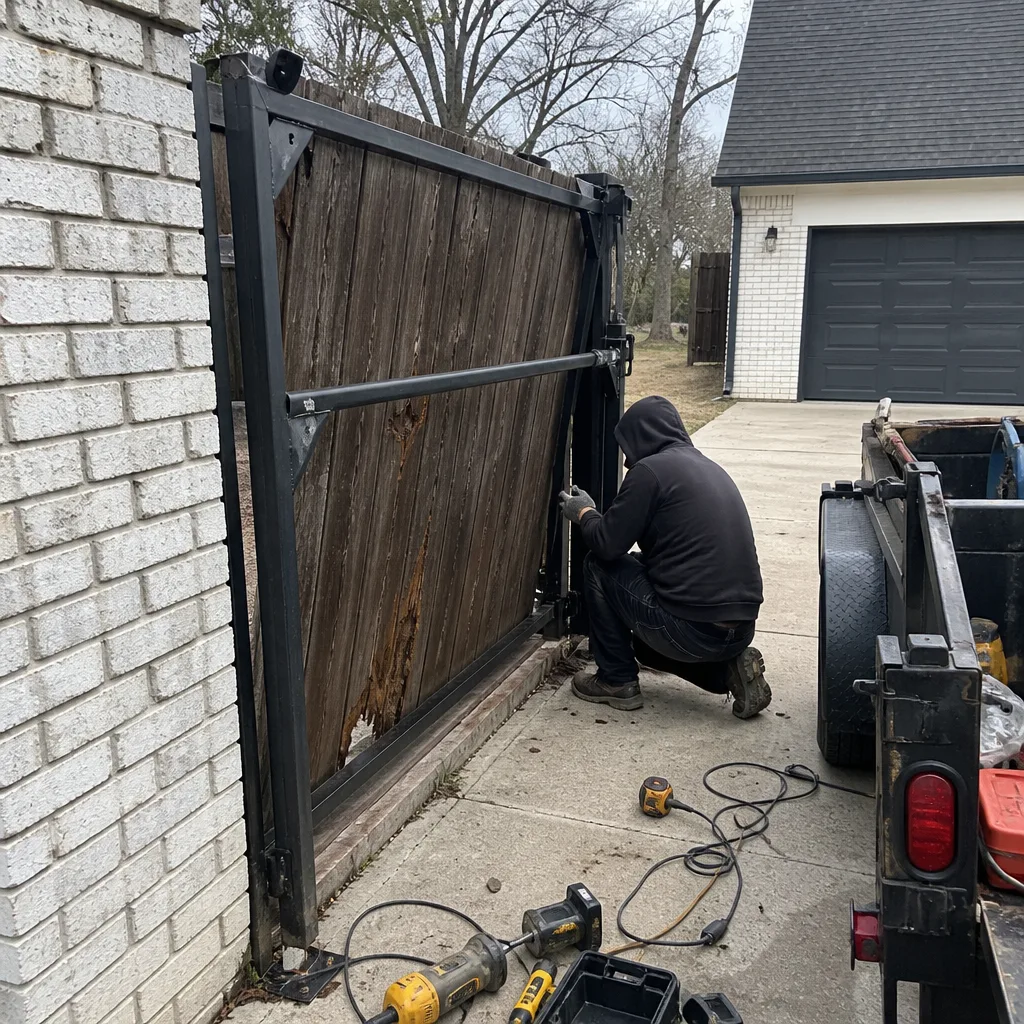 Before
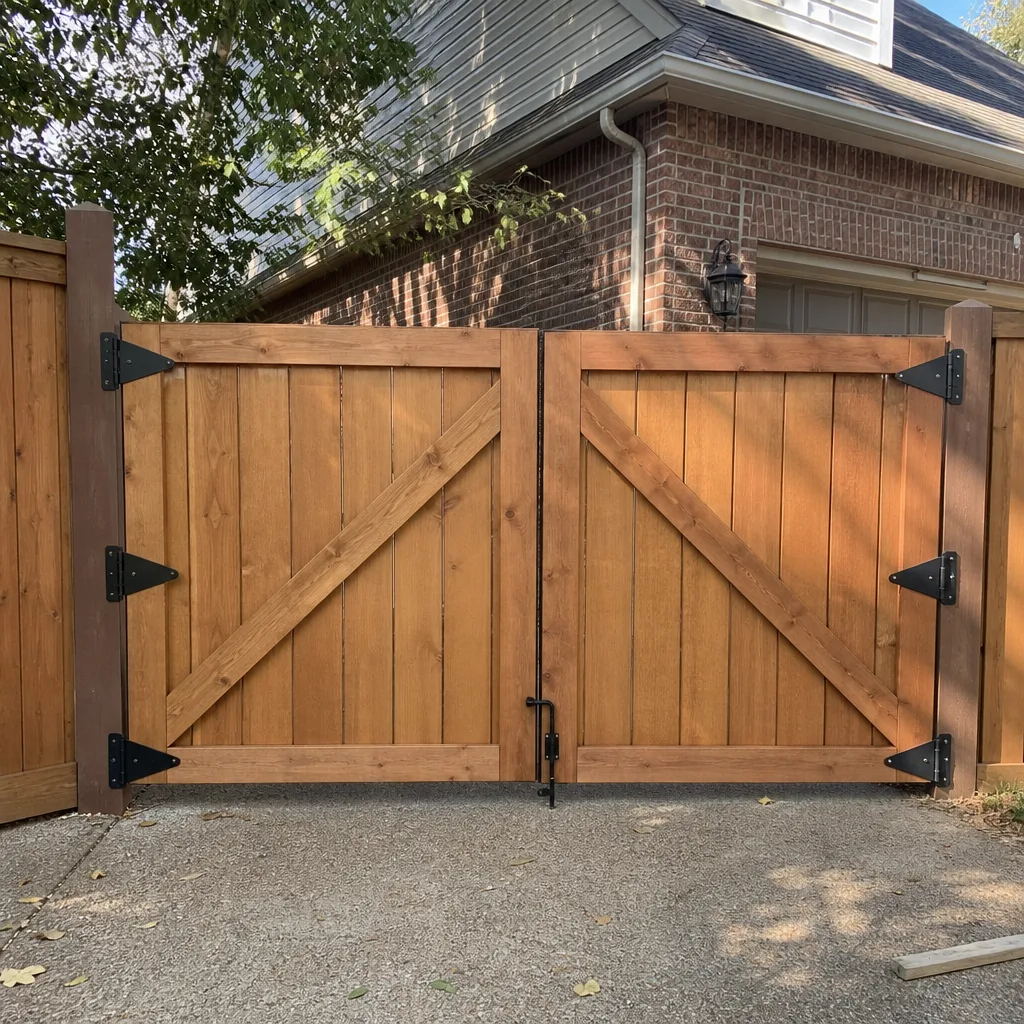 After
After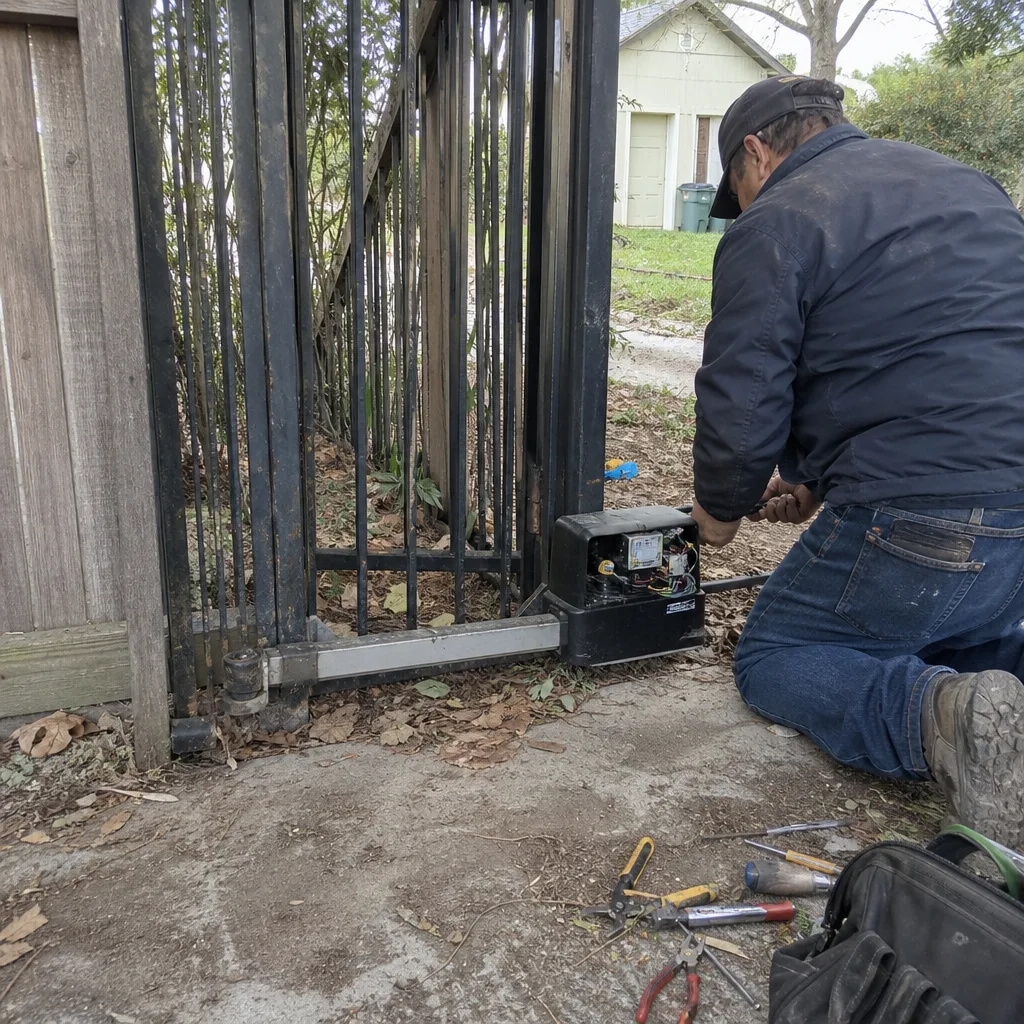 Before
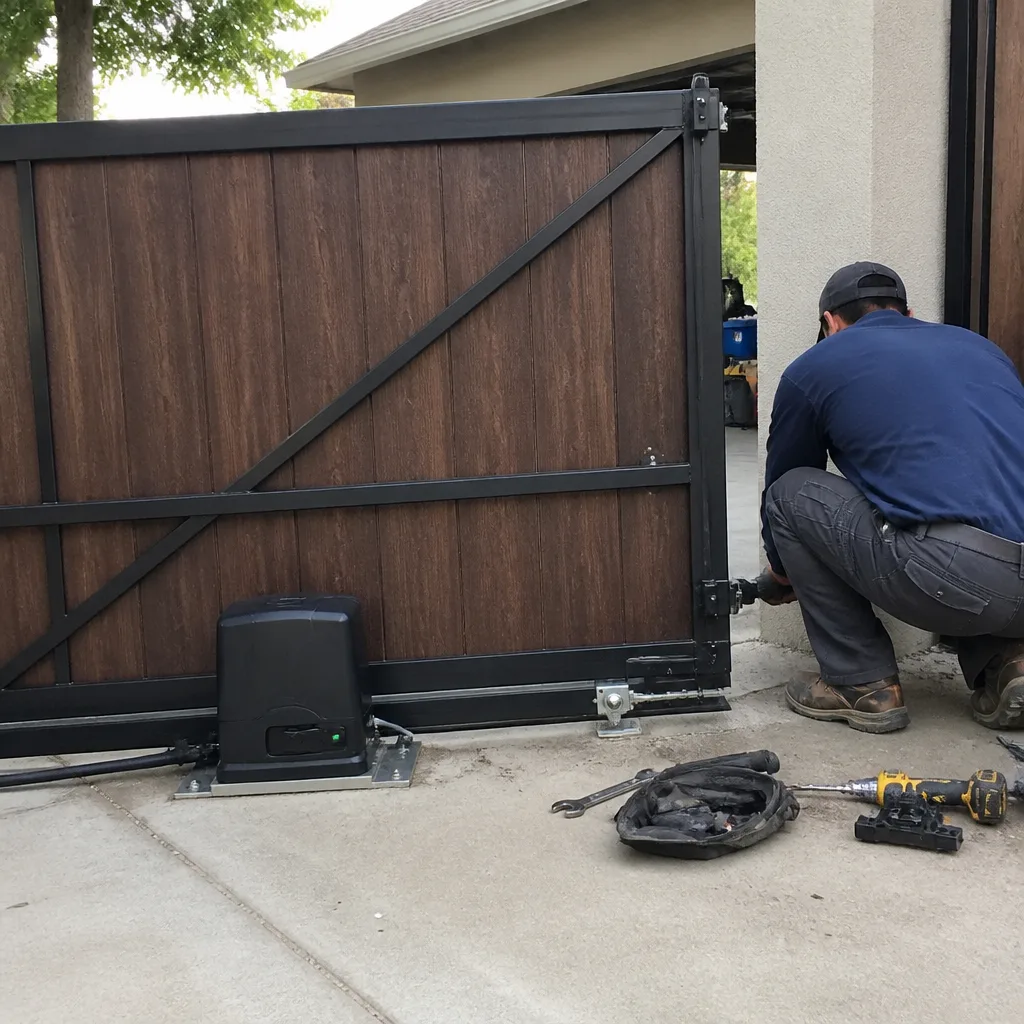 After
After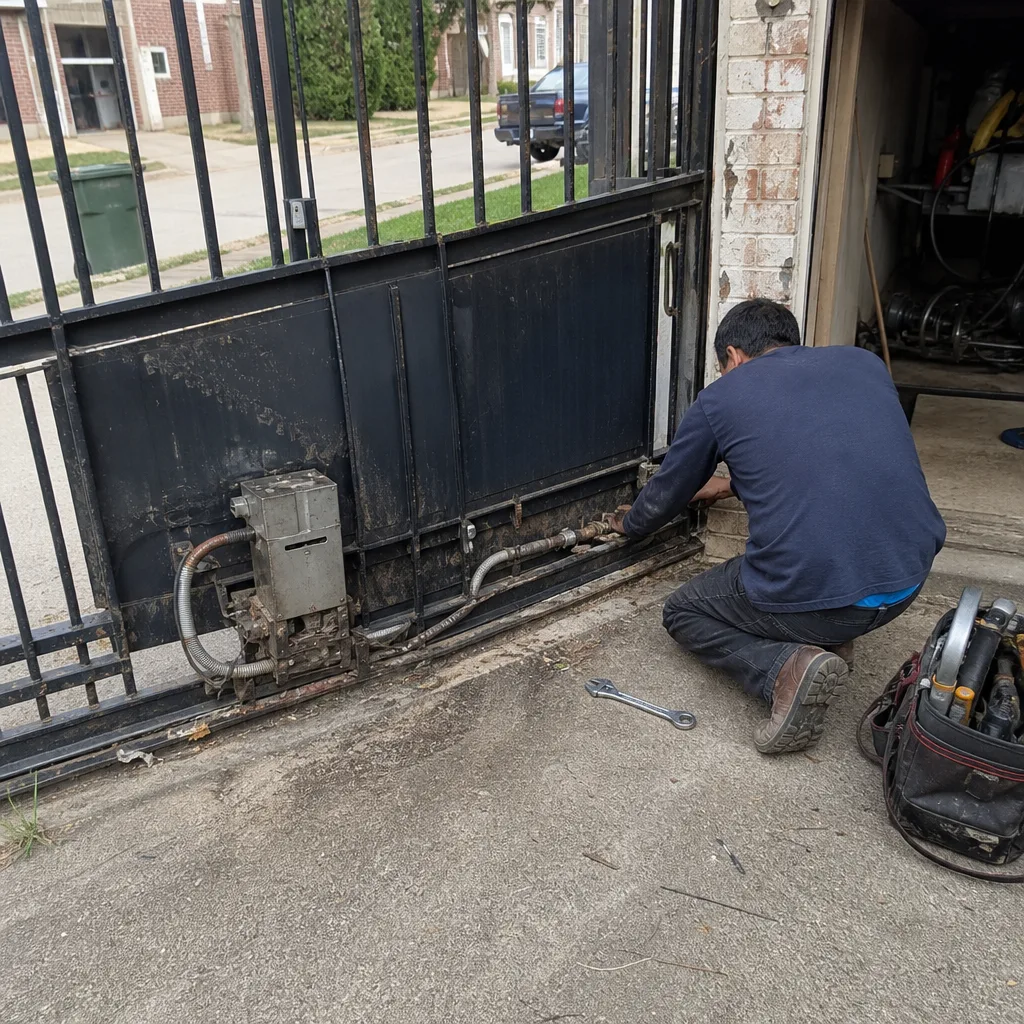 Before
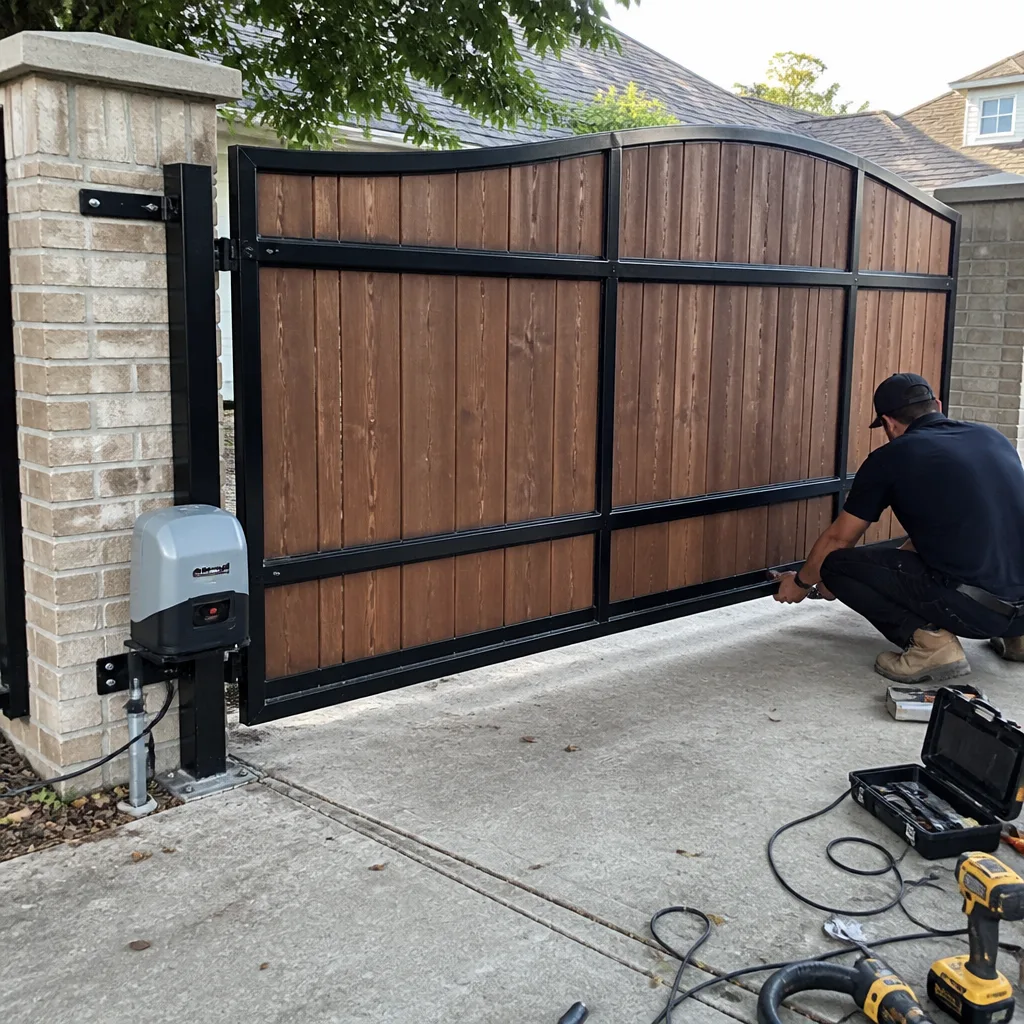 After
After